Flyer ID vs Operator ID Explained: Which Do You Need?
If you’re new to drones, you’ve probably come across two terms: Flyer ID and Operator ID.
We breakdown what the difference is, which one you need and how to get them.
Key Takeaways
- A Flyer ID is for the person flying the drone.
- An Operator ID is for the person or organisation responsible for the drone.
- A Flyer ID is free and valid for five years.
- An Operator ID currently costs £12.34 and needs to be renewed annually.
- Your Operator ID is displayed on your drone.
- Depending on the weight of your drone and whether it has a camera, you may need both.
What’s the Difference Between a Flyer ID and an Operator ID?
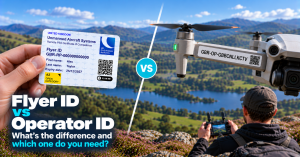
In the UK, a Flyer ID is a competency certificate for the person flying a drone. An Operator ID is the registration for the person or organisation legally responsible for the drone.
A Flyer ID shows that you’ve demonstrated an understanding of how to fly safely and legally by passing a theory test. The test is free and your Flyer ID is valid for five years. This is a simple multiple choice test you can undertake in your FPV UK Account.
An Operator ID identifies the person or organisation responsible for the drone. It currently costs £12.34 per year and, where one is required, must be displayed on the aircraft.
The simplest way to remember it is:
- Flyer ID = the person flying
- Operator ID = the person responsible for the drone
For many recreational pilots, that’s the same person, so it’s completely normal to need both.
| Flyer ID | Operator ID |
|---|---|
| Belongs to the person flying | Belongs to the person or organisation responsible for the drone |
| Shows you’ve passed the required competency test | Registers you as the drone operator |
| Free | £12.34 per year |
| Valid for five years | Valid for one year |
| Not displayed on your drone | Displayed on your drone where required |
Do I Need a Flyer ID, an Operator ID or Both?
This is where it can get confusing, whether you need a Flyer ID, an Operator ID or both, depends on the weight of your drone and whether it has a camera.
Here are some popular examples:
| Drone | Weight | Class | Flyer ID | Operator ID |
|---|---|---|---|---|
| DJI Tello | Approx. 80g with camera | Not Applicable | Recommended | Not required |
| Ryze Tello EDU | Approx. 87g with camera | Not Applicable | Recommended | Not required |
| DJI Neo 2 | 151g | UK0 with a camera | Required | Required |
| DJI Mini 5 Pro | 249.9g | UK0 with a camera | Required | Required |
| DJI Avata 360 | 455g | UK1 | Required | Required |
| DJI Air 3S | 724g | UK1 | Required | Required |
| DJI Phantom 4 Pro | Approx. 1.4kg | Legacy | Required | Required |
For most popular camera drones, including the DJI Mini range, DJI Neo and DJI Avata, you’ll generally need both a Flyer ID and an Operator ID.
The general rule of thumb is: if your drone weighs 250g or more, you’ll normally need both a Flyer ID and an Operator ID. For drones between 100g and 249g, you’ll need a Flyer ID, and you’ll also need an Operator ID if the drone has a camera.
Being under 250g doesn’t automatically mean there’s nothing you need to do before flying. The camera and the drone’s weight both matter, so check the current CAA requirements for your specific aircraft before you fly.
So, if you’ve bought a typical camera drone weighing more than 100g, there’s a good chance you’ll need both.
Even when registration isn’t required, you’re still responsible for following the relevant UK rules when you fly.
For an explanation of the different drone classes, please see here.
What Is a Flyer ID?
A Flyer ID shows that you understand the basic rules for flying a drone safely and legally.
It’s linked to you as the person flying, rather than to a particular drone, think of it like a driving licence.
You’ll generally need one if you’re flying a drone or model aircraft weighing 100g or more outdoors in the UK.
How Do I Get a Flyer ID?
Getting your Flyer ID is straightforward.
You’ll need to complete the required theory test and demonstrate that you understand the basic rules for flying safely.
The CAA’s Flyer ID theory test covers the rules contained within the Drone and Model Aircraft Code.
It covers things like:
- Safe flying distances
- Airspace
- Privacy
- Your responsibilities as a remote pilot
- The Drone and Model Aircraft Code
The test is free and, once you’ve passed, your Flyer ID is valid for five years.
FPV UK members can complete the required 40-question multiple-choice assessment through their FPV UK account, after which FPV UK can issue their UK CAA Flyer ID.
What Is an Operator ID?
An Operator ID is slightly different as it identifies the person responsible for managing the drone, it is responsible for things such as maintaining the aircraft, making sure it’s flown legally and ensuring anyone who flies it has the necessary competence.
For most adults who buy and fly their own drone, the operator and flyer will be the same person, but that’s not always the case.
For example, a parent might be the registered operator of a drone flown by their child. The parent holds the Operator ID, while the child has their own Flyer ID where required. You must be 18 or over to register as an operator.
An Operator ID currently costs £12.34 and lasts for one year. One Operator ID can cover all the drones and model aircraft you’re responsible for, so if your collection starts to grow, you’ll use the same ID across them.
Do I Have to Put My Operator ID on My Drone?
Yes, if your drone requires an Operator ID, you need to display it on the aircraft.
This is another easy one to mix up:
Put your Operator ID on the drone – not your Flyer ID.
The ID needs to be securely attached to the main body of the aircraft and clearly readable, following the CAA’s labelling requirements.
If you’re responsible for several drones that require an Operator ID, you’ll display the same Operator ID on each one.
You can purchase individual Operator ID stickers from the FPV UK store, once you’ve signed up.
Is a Flyer ID the same as a Drone Licence?
No. A Flyer ID isn’t a licence to fly wherever you want.
It shows that you’ve passed the required competency test and understand the basic rules.
You’ll still need to follow the Drone and Model Aircraft Code and check the rules for where you’re planning to fly.
So, even once you’ve got your Flyer ID and Operator ID sorted, it’s worth getting into the habit of checking your location before every flight. You can do this using TheDroneMap.com.
Explore UK Drone Regulations >
What is RID?
Remote ID is a way for drones and model aircraft to transmit their identity and location when flying.
Remote ID (RID) for drones in the UK begins in phases, with mandatory requirements for new, class-marked drones starting on 1 January 2026. For “legacy” drones (those without class markings purchased before 2026) and drones over 100g with a camera, the requirement to broadcast Remote ID kicks in on 1 January 2028.
Key Details on UK Remote ID Implementation:
- 1 January 2026: Mandatory for all UK class-marked drones (UK1–UK6) operating in the Open or Specific categories.
- 1 January 2028: Mandatory for all drones (including legacy, homemade, and model aircraft) over 100g equipped with a camera.
- Functionality: Remote ID broadcasts the operator’s ID and location via Wi-Fi or Bluetooth.
- Exceptions: The Civil Aviation Authority (CAA) allows time for operators to add external modules to older, non-class-marked drones before 2028.
It is highly recommended to ensure compliance by these dates to continue operating drones legally in the UK.
For more about RID, visit the CAA website: Remote ID (RID).
What Should I Do Before My First Flight?
Once you’ve worked out which IDs you need, getting ready to fly doesn’t need to be complicated.
- Check your drone’s weight and whether it has a camera.
- Get your Flyer ID if required.
- Register for an Operator ID if required.
- Put your Operator ID on the drone – not your Flyer ID.
- Read the Drone and Model Aircraft Code.
- Check where you’re planning to fly before taking off.
Your IDs are only one part of flying legally. You’ll still need to follow the rules that apply to your aircraft and check for restrictions before each flight.
If you’re completely new to drones, read our I Just Bought a Drone – What Do I Need Legally? guide next for a straightforward walkthrough of what to do before your first flight.
Can FPV UK Help Me Get Set Up?
Yes. FPV UK membership can make getting started, and staying on top of your responsibilities, simpler.
Depending on your membership, benefits include:
- £5 million public liability cover
- £1 million commercial public liability cover
- CAA registration support
- Access to TheDroneMap.com
- Article 16 Operational Authorisation
- Educational resources
- Member discounts
- A community of recreational drone pilots
FPV UK members can also complete the required Flyer ID assessment through their member account.
Instead of working everything out on your own, you’ve got the information and support you need as you get more confident with your drone.
Explore FPV UK Membership benefits >
Frequently Asked Questions
Do I need both a Flyer ID and Operator ID?
You may need both. Drones weighing 250g to less than 25kg require both. A drone weighing 100g to less than 250g requires a Flyer ID and, if it has a camera, an Operator ID too.
Is a Flyer ID the same as a drone licence?
No. A Flyer ID shows you’ve passed the CAA’s basic competency test for flying in the Open Category. It shouldn’t be thought of as a general licence allowing you to fly anywhere or in any way you choose.
How long does a Flyer ID last?
A Flyer ID lasts for five years. You’ll need to take the test again when it’s time to renew it.
How long does an Operator ID last?
An Operator ID lasts for one year. It currently costs £12.34 and needs to be renewed annually.
Do I put my Flyer ID or Operator ID on my drone?
Always use your Operator ID. If your aircraft requires an Operator ID, that is the number that must be displayed on it. Your Flyer ID should not be used to label your drone.
The Community
DroneHub - the FPV UK drone community hub
Connect with our super-friendly drone community
Join us on DroneHub.co.ukWorking With