I Just Bought a Drone – What Do I Need Legally Before Flying in the UK?
Last updated: September 2026
Reviewed by: FPV UK
There’s nothing quite like opening a new drone for the first time. Whether you’ve gone for a DJI Mini, an FPV drone or something to capture family holidays, it’s tempting to charge the battery and head straight outside.
Before you do, it’s worth spending a few minutes making sure you’ve got the legal side covered. Most of it is quick and straightforward, and getting it sorted now means you can enjoy your first flight with confidence.
This guide walks you through everything you need to know before taking off for the first time.
Key takeaways
- Check whether you need a Flyer ID
- Register for an Operator ID (if required)
- Attach your Operator ID to your drone
- Read the UK Drone Code
- Read the FPV UK Handbook (if you’re a member)
- Check where you’re allowed to fly
- Consider public liability cover
- Plan your flight using TheDroneMap
Contents
Can I Fly My Drone Straight Away?
Not always.
Before your first flight, it’s worth taking a few simple steps to make sure you’re flying legally.
For most new drone owners, that means:
- Checking whether you need a Flyer ID
- Registering for an Operator ID if required
- Displaying your Operator ID on your drone
- Reading the UK Drone Code
- Checking where you’re allowed to fly
- Thinking about insurance before your first flight
Don’t worry if that sounds like a lot. We’ll explain each step below.
Your First Flight Checklist
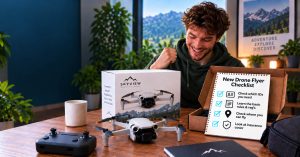
Before you fly, make sure you’ve:
☐ Batteries charged
☐ Controller charged
☐ Operator ID attached (if required)
☐ Flyer ID completed (if required)
☐ Read the Drone Code
☐ Read the FPV UK Handbook (if you’re a member)
☐ Checked local airspace restrictions
☐ Packed spare batteries and propellers
Keeping a simple routine before every flight helps prevent the mistakes that catch many new pilots out.
Do I Need a Flyer ID?
If your drone weighs more than 100g, you will need a Flyer ID before you fly it yourself. Requirements changed from January 2026, so many recreational pilots now need one even for relatively small drones.
A Flyer ID shows you’ve demonstrated an understanding of the basic rules for flying safely and legally.
The test is designed for recreational pilots and covers topics such as:
- Safe flying distances
- Airspace awareness
- Privacy
- Your responsibilities as a remote pilot
- The Drone Code
The Flyer ID is free and remains valid for five years.
FPV UK members can complete the required assessment directly through their member account.
Learn more about getting your Flyer ID >
Flyer ID vs Operator ID
This is one of the questions we hear most often.
| Flyer ID | Operator ID |
|---|---|
| Belongs to the pilot | Belongs to the person responsible for the drone |
| Shows you understand the rules | Registers the drone with the CAA |
| Free | Annual registration fee applies |
| Valid for five years | Renewed annually |
| Not displayed on the drone | Must be displayed on the aircraft |
A simple way to remember it:
- Flyer ID = the pilot (You)
- Operator ID = the aircraft owner
In many cases the ‘pilot’ and aircraft owner are the same person, so you may require both if this is the case.
Explore UK Drone Regulations >
Still not sure? Read Flyer ID vs Operator ID Explained: Which Do You Need?
Where Can I Legally Fly?
Just because there’s an open field doesn’t necessarily mean you can fly there.
Before every flight, it’s worth checking:
- Local restrictions
- Airspace
- Nearby airports
- Temporary flight restrictions
- Local bylaws
As a general rule:
- Keep away from airports and restricted airspace.
- Stay well clear of uninvolved people.
- Respect privacy.
- Never fly recklessly.
The easiest way to check is to use TheDroneMap, which helps you check airspace restrictions, Flight Restriction Zones (FRZs), NOTAMs and other important information before you fly.
How Can I Check If It’s Safe to Fly?
We created TheDroneMap for this exact reason, it helps you quickly check:
- Airspace restrictions
- Flight restriction zones (FRZs)
- NOTAMs
- Potential hazards
- Other useful planning information
Checking the map before every flight only takes a minute and can save you from accidentally flying somewhere you shouldn’t.
Do I Need Drone Liability Cover?
Liability cover isn’t legally required for most recreational drone pilots, but it’s one of the smartest investments you can make.
Accidents happen. A gust of wind, a clipped tree branch or a simple mistake can quickly become expensive if your drone damages someone’s property or injures another person.
Public liability insurance gives you peace of mind when you’re out flying.
FPV UK membership also includes:
- £5m Public Liability for Non-Commercial Flying – third-party injury or property damage
- £1m Public Liability for Commercial Flying – EC 785/2004-compliant liability cover
- Up to £15,000 of commercial drone flying per year
- CAA registration support
- Access to TheDroneMap
- Educational resources
- Community support
- Member discounts that could save you several times the cost of membership
If you’re unsure what protection is included with FPV UK membership, compare the full membership benefits.
Common Mistakes New Drone Owners Make
Most mistakes happen before the drone even leaves the ground.
Some of the most common include:
- Flying without checking local restrictions.
- Flying without checking the weather or flying in unsuitable conditions
- Forgetting to attach an Operator ID.
- Assuming every park allows drones.
- Flying close to uninvolved people.
- Skipping a basic pre-flight check.
Spending a few minutes preparing before each flight is one of the easiest ways to avoid problems.
FPV UK exists to make that learning process easier, with practical guidance, member support and tools that help recreational drone pilots fly safely and legally.
Ready for Your First Flight?
Once you’ve registered (if required), checked the rules and planned your flight, you’re ready to enjoy your drone with confidence.
If you’re looking for extra support, FPV UK membership includes:
- £5m Public Liability for Non-Commercial Flying – Third party injury or property damage.
- £1m Public Liability for Commercial Flying – EC 785/2004 compliant liability cover.
- £15,000 Commercial Flying Per Year – Do up to £15,000 of commercial drone work p/yr.
- Article 16 Operational Authorisation
- TheDroneMap
- CAA registration support
- Educational resources
- Member discounts
- A community of recreational drone pilots
If you’re planning to fly regularly, it’s also worth understanding Article 16 Operational Authorisation and how it gives members greater flexibility in certain situations. We’ve explained it in more detail here.
Explore FPV UK Membership benefits.
Frequently Asked Questions
Do I need to register my drone in the UK?
Usually, yes. If your drone has a camera or falls within the relevant weight thresholds, you will need an Operator ID, and Flyer ID before flying.
Can I fly a DJI Mini without registering?
No
Do I need insurance to fly a drone?
Not by law for most recreational flying, but it’s strongly recommended. Insurance provides valuable protection if your drone accidentally causes injury or property damage.
Can I fly my drone in my local park?
Sometimes. It depends on local bylaws, airspace restrictions and whether you can fly safely while maintaining the required separation from uninvolved people. Always check TheDroneMap before you fly.
What’s the first thing I should do after buying a drone?
Register it if required, learn the rules and plan your first flight. Understanding the legal requirements before taking off is the quickest way to become a safe and confident drone pilot.
The Community
DroneHub - the FPV UK drone community hub
Connect with our super-friendly drone community
Join us on DroneHub.co.ukWorking With